

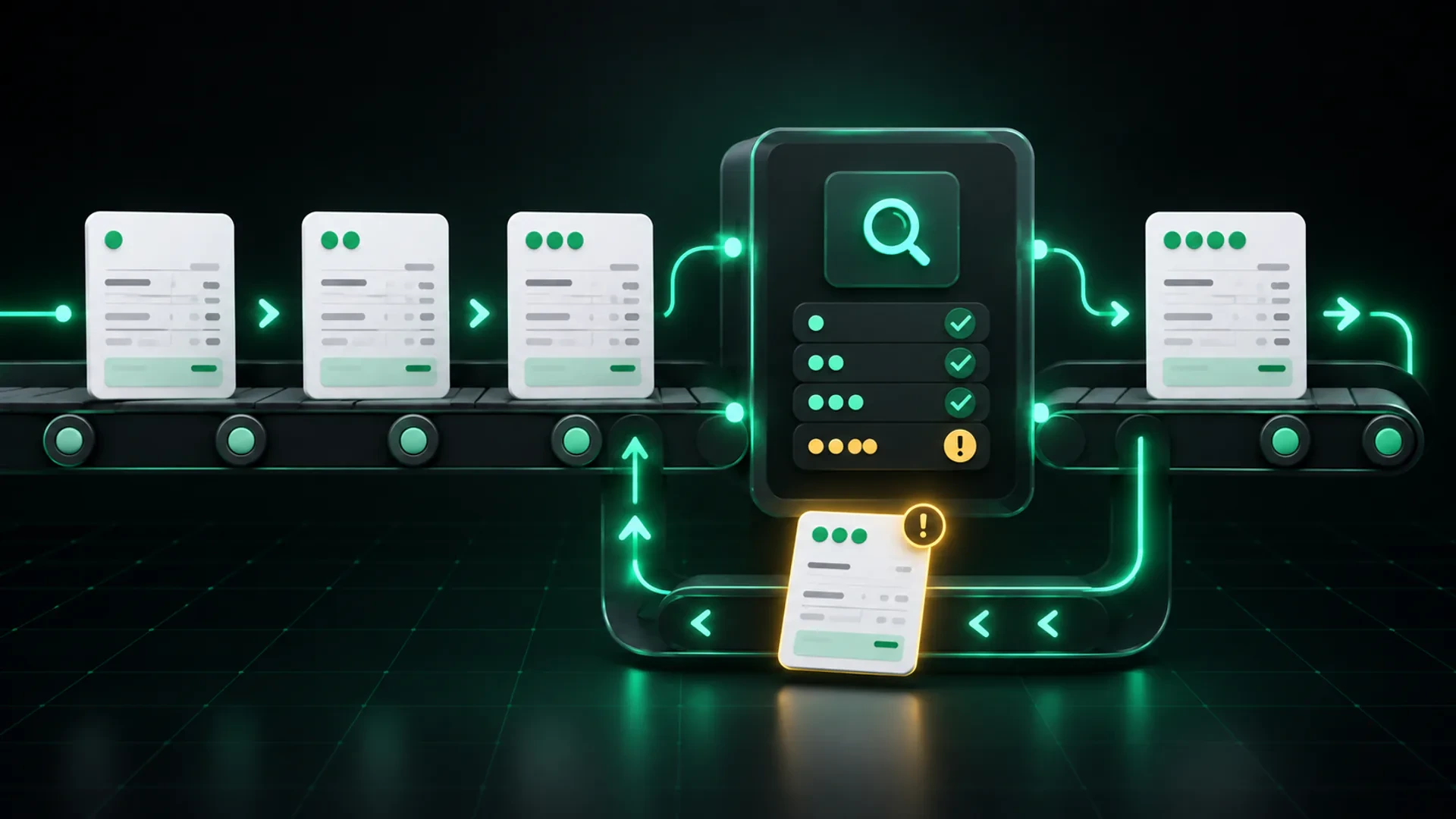
An invoice numbering system gives every invoice a unique, recognizable reference. A useful format is easy to generate, easy to read, and consistent enough that another person can find the correct document without guessing.
The system does not need to be complicated. For many small businesses, a short prefix and a sequential number can be enough. What matters is that the format supports the way the business creates, sends, tracks, and retrieves invoices.
Invoice and recordkeeping requirements vary by location and business type. This article offers operational guidance for small businesses in the United States and is not legal, tax, or accounting advice.
What is an invoice number?
An invoice number is a unique reference assigned to an invoice. It helps distinguish that document from other invoices, estimates, payment records, and client communications.
The reference can appear on the invoice, in the delivery message, in payment notes, and in follow-up communication. Using the same number throughout the process makes it easier to answer questions such as:
- Which invoice is the client asking about?
- Was a payment recorded against the correct document?
- Which version is current?
- Is the message referring to an invoice or an estimate?
What makes an invoice numbering system useful?
Every invoice has a unique reference
Avoid assigning the same number to two invoices. A duplicate creates ambiguity for the client and for anyone reviewing payments or follow-up activity.
The format is predictable
A team member should be able to recognize the structure without decoding a long string. Predictability also makes missing or unusual references easier to notice.
The sequence can continue over time
Choose a format that will still make sense when the business creates more invoices. A system that depends on remembering an informal naming habit is difficult to scale.
The number does not expose sensitive information
Do not place confidential client or account information in an invoice reference. A short internal client code may be useful in some workflows, but it should not reveal information that does not belong on the document.
Related documents remain distinct
Estimates and invoices serve different purposes. If both use references, make the document type recognizable or maintain separate sequences so the team does not confuse them.
Common invoice number formats
The following examples are illustrative, not required formats.
Simple sequential format
`INV-0042`
This format is short and easy to continue. It works best when one business uses one clear invoice sequence.
Year plus sequence
`INV-2026-0042`
The year adds context while the sequence keeps each reference distinct. Decide in advance whether the sequence resets each year or continues across years.
Business or location prefix
`NORTH-INV-0042`
A short prefix can help distinguish records when a business has documented divisions or locations. Avoid adding prefixes that are likely to change frequently.
Client code plus sequence
`ACME-0042`
This may help in some workflows, but client-based numbering can become harder to manage when one invoice includes several projects or when client names change. Use only non-sensitive, stable codes.
How to build your invoice numbering system
1. Decide what the number needs to identify
Start with the operational need. Does the business need only a unique invoice reference, or must it also distinguish years, locations, or business profiles?
Use the fewest components that solve the real problem. More information does not automatically create a clearer reference.
2. Choose a consistent prefix
`INV` is easy to recognize, but another short label may fit the business. If estimates also have references, consider a distinct prefix such as `EST` so both document types are clear.
3. Select the starting number and length
Leading zeros can keep references visually consistent: `0001`, `0002`, `0003`. Choose enough digits for the expected volume without creating an unnecessarily long number.
4. Define whether the sequence resets
A continuous sequence is simple to maintain. A yearly reset can make the year easier to recognize, but it requires the year to remain part of the reference so `INV-2026-0001` is distinct from `INV-2027-0001`.
Write down the rule instead of relying on memory.
5. Assign the reference once
Create the invoice number when the invoice is created under the business’s normal workflow. Avoid changing it casually after the invoice has been sent, linked to a payment, or referenced in communication.
If a correction or replacement is required, follow the process appropriate for the business and applicable requirements. Preserve enough history to understand what happened.
6. Use the reference everywhere the invoice appears
Repeat the same invoice number in:
- the invoice document;
- the email subject or delivery message;
- the payment record;
- the client’s payment reference when appropriate;
- follow-up communication;
- internal notes related to the invoice.
Consistency reduces the chance that two people discuss the same invoice using different labels.
7. Review the sequence regularly
Look for duplicates, unexpected gaps, inconsistent prefixes, or invoices stored under informal filenames. A gap does not automatically mean something is wrong, but the team should be able to understand its cause from the record.
How to handle multiple businesses or profiles
Do not rely on invoice numbers alone to separate different businesses. Keep the business identity, client-facing details, and records clearly associated with the correct profile.
If each business uses a separate sequence, add a stable prefix or another documented distinction. For example, two profiles could use `A-INV-0042` and `B-INV-0042`. The exact approach should match the business’s accounting and recordkeeping process.
The IRS notes that a person operating more than one business should keep a complete and separate set of records for each business. IRS Publication 583: https://www.irs.gov/publications/p583 provides general federal recordkeeping guidance; consult an appropriate professional for the structure that applies to your situation.
Mistakes that make invoice references harder to use
Using only the client name
A client can have several invoices. The name identifies the relationship, not the individual document.
Using the date alone
Two invoices may be created on the same date. Dates are useful context but may not be unique references.
Changing formats without a transition rule
Moving from `42` to `2026-042` without documenting the change makes the sequence harder to interpret. Record when and why the new format began.
Reusing a deleted or canceled number
Reusing a reference can make later searches and payment matching ambiguous. Preserve the history needed to explain the status under the business’s process.
Mixing estimates and invoices in one unclear sequence
If `0042` could refer to either an estimate or an invoice, communication becomes less precise. Use a visible document type or a clearly documented system.
How GetBill supports clearer invoice organization
GetBill helps small and midsize businesses create professional invoices and estimates, organize clients and products, share documents, and keep payment records and remaining balances connected.
Use the free 3-day trial to create a sample invoice, review how its reference appears in the document, and test whether your team can identify the same invoice throughout delivery and payment tracking. Confirm that the available setup fits the numbering process your business needs.
GetBill is available on Google Play: https://play.google.com/store/apps/details?id=com.aimovelogistics.getbill and the Apple App Store: https://apps.apple.com/us/app/getbill/id6796384355.
Invoice numbering checklist
Before adopting a format, confirm that:
- every invoice will have a unique reference;
- the structure is short and recognizable;
- prefixes have a documented meaning;
- yearly resets, if used, remain unambiguous;
- estimates and invoices cannot be confused;
- confidential information is excluded;
- the same reference follows the invoice into payment and follow-up records;
- multiple businesses maintain clearly separate records;
- changes to the format can be explained later.
Review the last ten invoices your business created. If their references are inconsistent or difficult to trace, define one simple rule and test it in a free 3-day GetBill trial on Android or iOS.