


A pro forma invoice is a preliminary, non-binding document sent before a sale is finalized, and it can be used to outline costs, support customs clearance, or request a deposit without creating a formal tax or accounting entry. In trade settings, it may also be the document that helps enable licensing, financing, or shipment processing before the final invoice exists.
You've probably felt this friction already. A buyer wants numbers before approval, a freight forwarder wants more detail than a quote gives, and your accounts team doesn't want anything posted too early. That's where a pro forma invoice earns its keep, because it gives everyone a structured reference point without pretending the sale is complete.
Table of Contents
- Understanding the Proforma Invoice
- Proforma vs Commercial Invoice vs Quote
- When to Use a Proforma Invoice in Global Trade
- Managing Deposits and Partial Payments
- Essential Fields and Formatting Rules
- Common Mistakes and Compliance Risks
Understanding the Proforma Invoice
A pro forma invoice starts where a quote stops. A quote can sketch the offer, but a pro forma invoice looks like an invoice because it needs to satisfy more formal workflows, especially in trade, finance, and procurement.
Why businesses use it before the sale is final
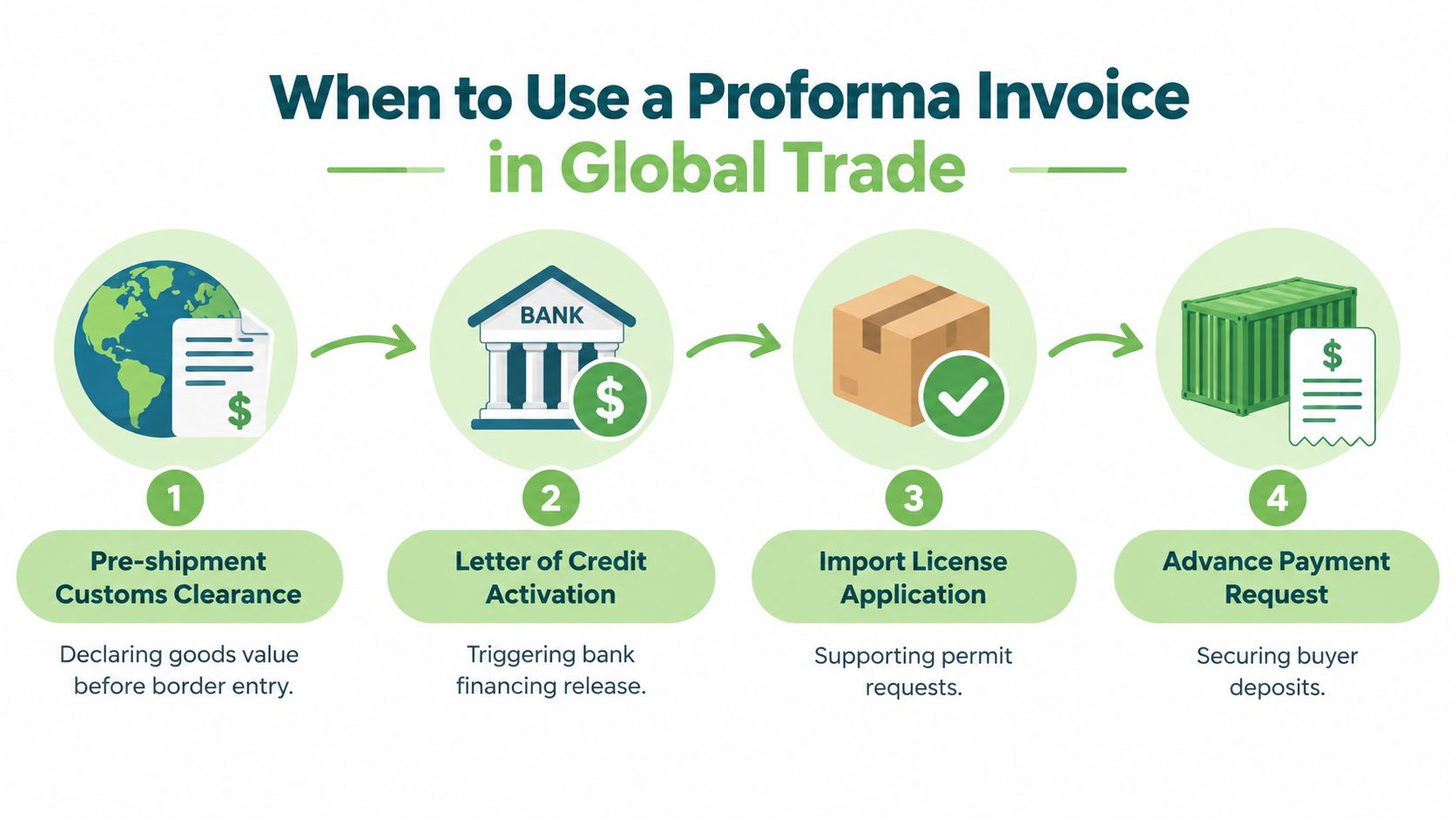
The U.S. International Trade Administration says a pro forma invoice may be needed to apply for an import license, arrange pre-shipment inspection, open a letter of credit, or transfer hard currency (Trade.gov guidance on pro forma invoices). That's a strong clue about its real job. It isn't just a sales document, it's a pre-transaction control document that helps other parties decide whether the deal can move forward.
HMRC's internal guidance draws the accounting boundary clearly. A pro forma invoice may include some or all of the information on a normal invoice, but it doesn't fulfill the invoice's primary accounting function and normally doesn't belong in the books of account (HMRC guidance). That means it gives buyers and banks something concrete to review, while still staying outside formal revenue recognition.
Practical rule: If the sale hasn't happened yet, the document should describe the transaction, not book it.
What readers usually confuse
The main confusion is emotional, not technical. The document looks official, so people assume it already carries tax or payment consequences. It doesn't, unless it's later converted into a real invoice after the supply takes place.
That's why a pro forma invoice is useful in shipping, financing, and deposit workflows. It gives the other side a detailed price-and-terms statement before shipment or delivery, which reduces back-and-forth and makes approvals easier to manage.
Proforma vs Commercial Invoice vs Quote
A lot of billing mistakes start because teams use these three documents interchangeably. They aren't interchangeable, and the differences matter in accounting, tax, and customs.
A quote is usually the lightest document. It proposes a price and scope, but it doesn't try to behave like a formal invoice. A pro forma invoice sits in the middle, it carries invoice-style detail without becoming the final accounting record. A commercial invoice is the finished document, the one that supports the completed sale and belongs in the accounting workflow.
| Feature | Quote / Estimate | Proforma Invoice | Commercial Invoice |
|---|---|---|---|
| Main purpose | Proposed price and scope | Preliminary invoice-style document | Final bill and accounting record |
| Timing | Before approval | Before shipment or final sale | After sale completion |
| Tax treatment | Usually informational | Not a tax invoice | Used for formal tax/accounting treatment |
| Books of account | No | Normally no | Yes |
| Customs use | Limited | Often used in trade workflows | Final customs document |
The clearest boundary is tax. A pro forma invoice is generally not treated as a tax invoice, so it doesn't create a VAT or sales-tax point when issued (DHL on proforma vs commercial invoice). That's why it needs to be labeled carefully, especially if your customer's finance team is used to paying anything that looks invoice-like.
For many small businesses, the practical choice is simple. Use a quote when you're still negotiating, use a pro forma when a buyer, bank, or customs process needs a more formal document, and use a commercial invoice only after the sale is finalized and the transaction belongs in your books.
If you're sorting the everyday differences between billing documents, the comparison in estimate vs invoice vs receipt is a useful companion.
When to Use a Proforma Invoice in Global Trade
A buyer in another country has agreed in principle, but the shipment still needs bank approval, customs review, or an import permit. In that moment, a pro forma invoice becomes the working document everyone can act on. It is not the final bill. It is the paper trail that lets the deal move without treating the sale as complete too early.
The customs and finance use cases
A practical example is an Egyptian importer arranging a letter of credit. The bank may ask for a pro forma before the LC is issued, so the document has to carry the right product description, HS codes, and Incoterms from the start. If those details are missing, the bank may pause the file or ask for revisions, which can delay the shipment before it leaves.
The same document can support customs clearance when the commercial invoice is not ready yet. Some customs processes may accept a pro forma in limited circumstances and with a bond, followed by the final commercial invoice later (Drip Capital explanation of U.S. customs practice). That is why the pro forma matters as a control document, not just a sales summary. It gives the border process something concrete to review while the final invoice is still pending.
What customs needs from it
Customs and trade teams look for the details that determine duty and shipment treatment. That means Incoterms, HS or customs codes, weights, origin, and declared value (Bring customs guidance). A document that skips these fields can slow clearance because customs is checking data, not reviewing a proposal.
Missing fields do not just slow paperwork, they can slow clearance.
A good pro forma is built for the next checkpoint in the chain. If the importer needs it for permission, the bank needs it for financing, or the customs broker needs it for entry, the document has to be complete enough to survive that review. A vague draft helps no one. A precise pro forma keeps the shipment, the payment process, and the compliance trail aligned.
Managing Deposits and Partial Payments
A pro forma invoice is also useful long before shipping is involved. Service businesses use it to frame the scope of work, set expectations, and secure a deposit without issuing a final invoice too early.
A practical workflow for service businesses
A consultant sends a pro forma invoice after agreeing the project scope. It lists the services, line items, delivery terms, and expected total, but it's still clearly a preliminary document. The client reviews it, approves it, and then pays the deposit. Only after that does the business issue the final invoice that belongs in the accounting record.
That order matters because it keeps the approval trail clean. The client can see what was agreed before any work starts, and the business doesn't have to guess whether the first document was meant as a quote, a payment request, or a bill. In day-to-day operations, that clarity prevents awkward email chains and later disputes over what was included.
Where software helps
Billing tools that let an estimate convert into an invoice reduce duplicate entry and make partial payments easier to track. GetBill supports estimate generation, invoice creation, and partial payment recording, so a team can move from approval to billing without rebuilding the same line items twice.
For a small agency, that can mean the difference between a messy payment trail and a clean one. The pro forma establishes the agreed scope. The deposit is recorded against the job. The final invoice closes the loop when the work is done.
If you handle deposits regularly, tracking partial payments and invoice balances is worth tightening before the next project starts.
Essential Fields and Formatting Rules
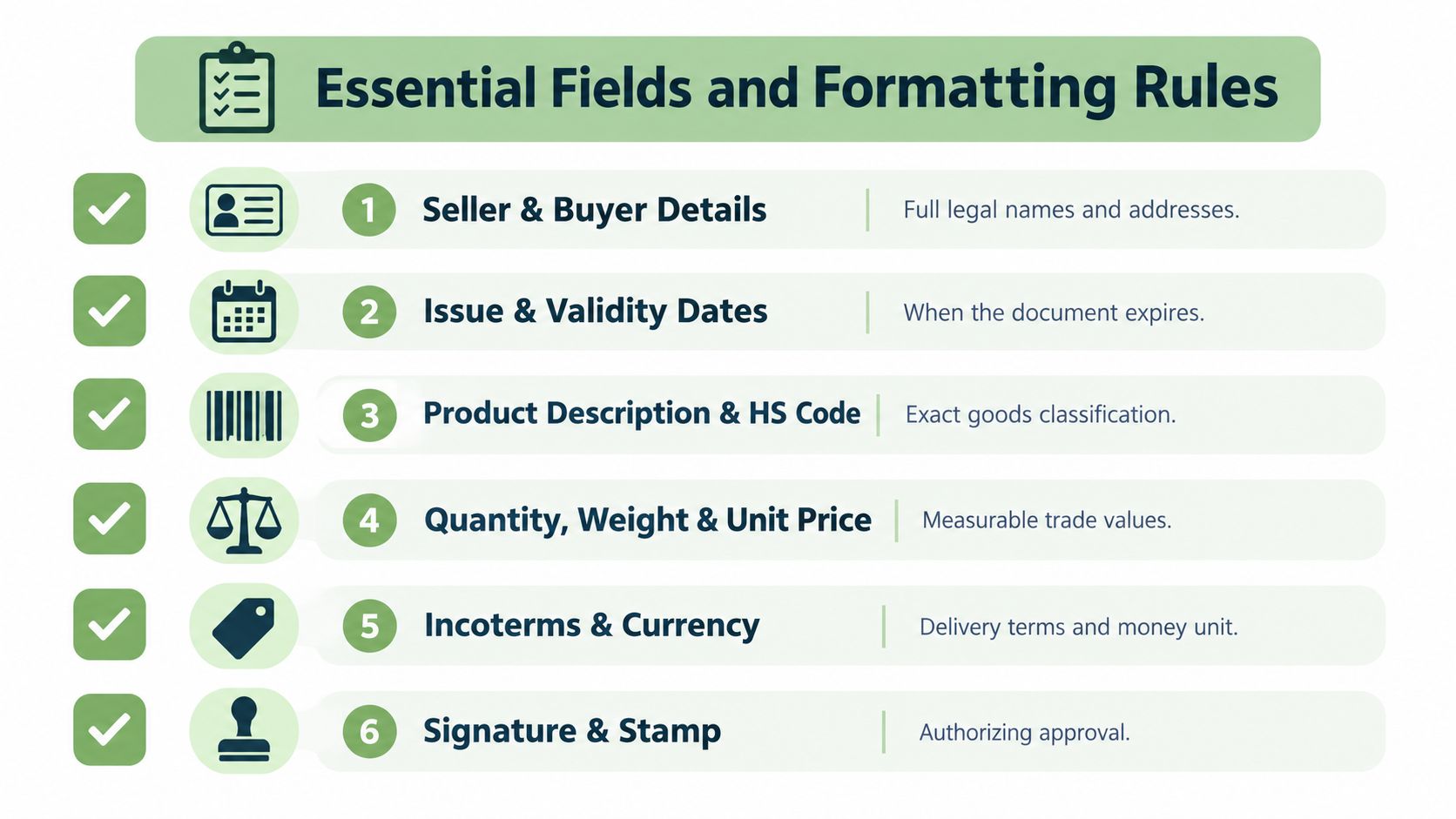
A pro forma invoice has to be complete enough for the recipient to act on it. Customs teams, finance teams, and procurement teams all look for different details, but they usually start with the same core information.
Checklist for a usable document
- Seller and buyer details: Use full legal names and addresses so the document can be matched to the right parties.
- Issue and validity dates: Show when it was created and when the pricing expires, because a pro forma should not sit open-ended.
- Product description and HS code: Describe the goods clearly and include the customs classification where relevant.
- Quantity, weight, and unit price: Give measurable figures so the buyer and customs broker can check totals.
- Incoterms and currency: State delivery responsibility and the currency used for the transaction.
- Signature and stamp: Add authorization where your workflow expects approval.
Label it correctly
The document should be clearly marked as a pro forma invoice, and HMRC guidance says it should preferably be endorsed “This is not a VAT invoice” (HMRC guidance). That wording helps stop a pre-sale document from being treated like a tax invoice and keeps it out of the accounting record until the sale is real.
Set an expiry window
Sellers often give the document a validity period. Common trade practice uses 30, 60, or 90 days, depending on price volatility and lead times.
Rigidity is not the goal. The goal is a price that stays usable through approval, financing, or procurement without leaving the offer open forever.
Useful habit: Put the expiry date on every pro forma, even when the buyer doesn't ask for it.
That keeps pricing expectations aligned with supply costs and reduces the chance that someone treats an old draft as a live commitment.
If your team needs help standardizing the final bill that follows approval, this invoice creation guide is a practical starting point.
Common Mistakes and Compliance Risks
The biggest mistake is letting a pro forma invoice behave like a final invoice. Once that happens, teams start posting the wrong document, tracking the wrong status, or assuming tax has already been handled.
Where the risk shows up
HMRC says a pro forma invoice normally has no place in the books of account, so it should not consume your invoice sequence or be treated as revenue. If payment arrives before delivery, the tax point changes and a proper VAT invoice should be issued for accounting purposes, not the pro forma itself (HMRC VAT guidance summarized in the source). The operational mistake is simple, but expensive to unwind later.
On the customs side, the risk is different. In U.S. practice, a pro forma can stand in for a commercial invoice only in limited cases, and the commercial invoice must follow within 120 days under the CBP bond arrangement. If the final paperwork does not arrive on time, the shipment record is incomplete and the goods can be delayed or corrected.
The safest way to use it
- Keep a separate reference series: Don't let a pro forma borrow from your final invoice numbering.
- Mark it clearly: Make it obvious that the document is preliminary and not a tax invoice.
- Convert, don't repurpose: When payment is due, issue the official invoice rather than editing the pro forma into one.
- Check the workflow owner: Finance, customs, and sales may each need the document for a different reason, so assign one person to confirm which version is in play.
A pro forma invoice is a control document, not a billing shortcut. It helps buyers approve, banks release funds, and customs process the shipment, but it should never blur the line between a proposed transaction and an actual sale.
If your team needs help standardizing the final bill that follows approval, GetBill gives small businesses a practical billing workflow with reusable clients, products, partial payment tracking, and invoice generation. Visit GetBill to see how it supports the handoff from approval to billing without creating confusion between preliminary and final documents.