

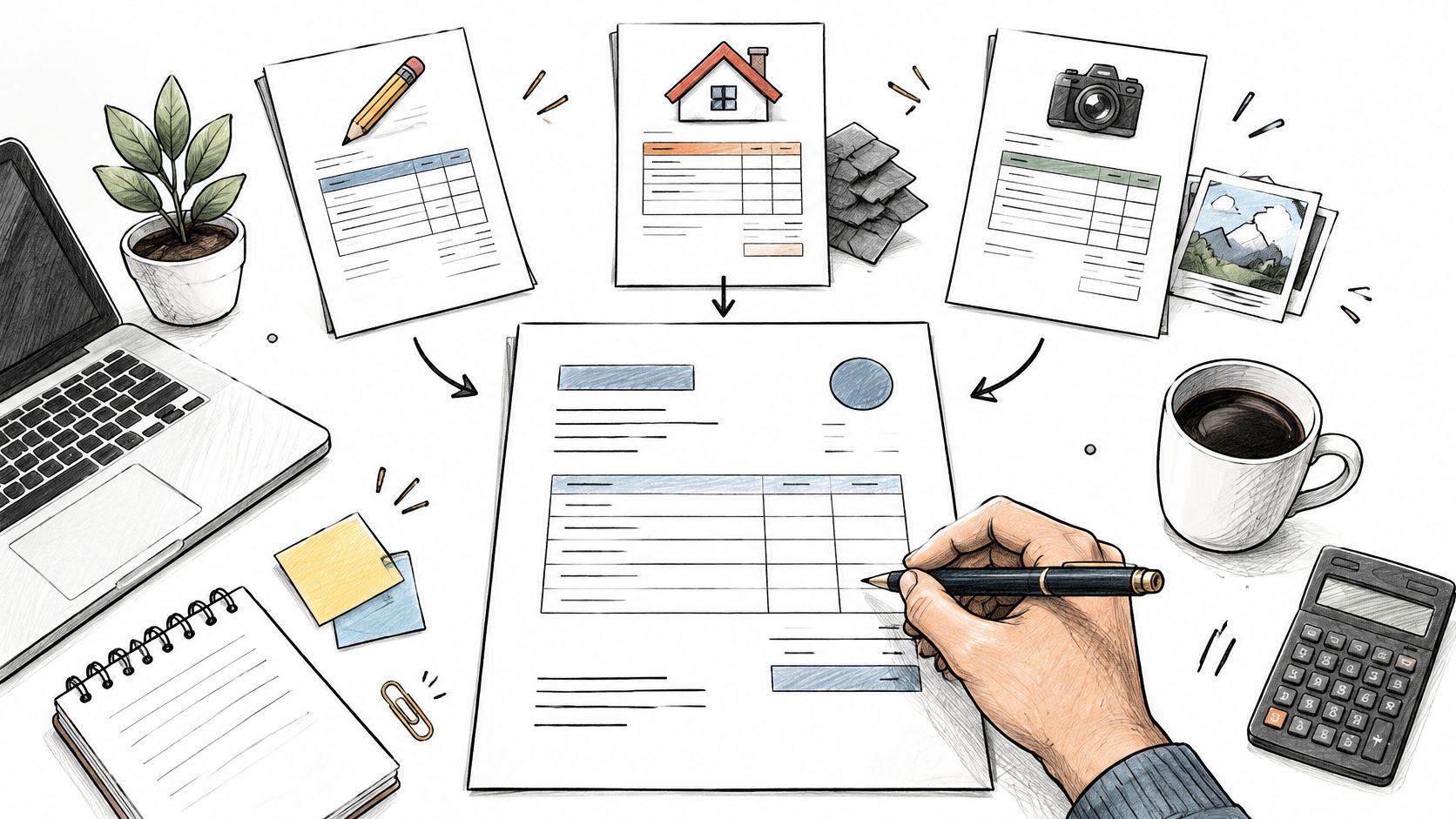
The work is finished, the client has the files, and the invoice is still sitting in drafts. The owner knows what was agreed, but the document needs to explain it to someone who may never have joined the project calls.
A copywriter, a roofer, and a portrait photographer can send bills that look similar and still receive very different questions. The copywriter gets asked how long the work took. The roofer gets asked why materials cost more than the estimate. The photographer gets asked what the usage rights cover.
The right invoice layout follows the billing agreement, not the business's logo. An hourly invoice needs quantities and rates. A deposit invoice needs a payment history. A commercial photography invoice needs a clear distinction between producing images and licensing their use.
For an owner searching for an invoice example for self employed work, these examples provide practical starting points:
- Time or deliverables: Itemized service invoices and estimates converted into invoices.
- Staged payments: Deposit invoices and milestone invoices.
- Special billing arrangements: Photography licensing, reimbursable expenses, and recurring retainers.
Each format below identifies the working fields, the questions they prevent, and the supporting records that belong behind the invoice. These are business-document recommendations, not a universal statement of legally required fields. Tax treatment, contract terms, and local invoicing requirements still need separate review.
Table of Contents
- 1. Itemized Service Invoice for Hourly or Flat-Fee Work
- 2. Estimate Converted into Invoice
- 3. Deposit and Partial Payment Invoice
- 4. Milestone-Based Project Invoice
- 5. Photography Session Invoice with Usage or Licensing Lines
- 6. Trade Invoice with Labor, Materials, and Reimbursable Costs
- 7. Recurring Service Invoice for Retainer or Monthly Clients
- How the seven invoice examples differ
- Choose the Layout That Matches How You Get Paid
1. Itemized Service Invoice for Hourly or Flat-Fee Work
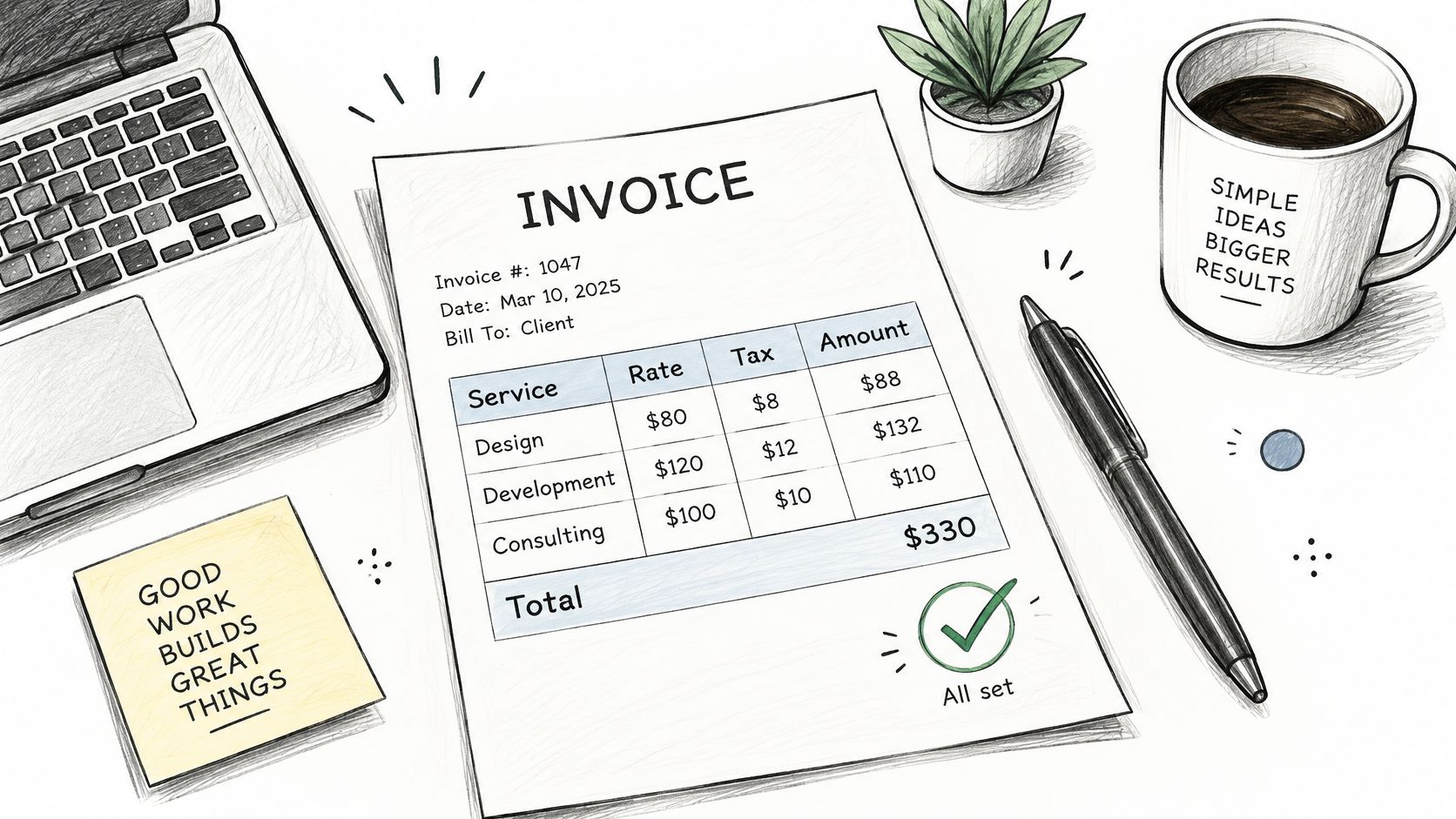
A consultant's hourly bill and a copywriter's flat-fee bill need different line details, even when they use the same basic layout. The client should be able to match each charge to the agreed work without asking what a line means.
Fields That Answer Approval Questions
- Seller and client details: Include business names, contact details, and the billing recipient. These help route the invoice to the person responsible for approval.
- Invoice number and dates: Use a unique reference, issue date, service dates, and exact due date so the client can distinguish this bill from earlier work.
- Description, quantity, and rate: For a flat fee, name each deliverable, such as a blog post, and state its agreed fee. For hourly work, list the activity, hours, and hourly rate. These fields prevent questions about what was billed and how the total was calculated.
- Subtotal, applicable tax, and total: Keep the amounts separate so the client can check the arithmetic and identify the tax treatment.
- Payment instructions and status: State the accepted payment methods, currency, and outstanding balance. This makes the next step clear.
For a cleaner, separate standard residential cleaning from an approved window-cleaning add-on. Show a supply fee on its own line only if the client agreed to pay it separately. An unexpected charge can hold up approval.
Describe the deliverable, not just the activity. “Logo concept revisions, agreed revision round” gives the approver more context than “design work” and helps prevent a dispute over what the fee covers.
Records Behind the Invoice
For U.S. business recordkeeping, the IRS's Publication 583 identifies invoices, receipts, deposit slips, and canceled checks as supporting documents. Keep the invoice connected to the agreement, time records, and payment evidence, and retain copies for the applicable recordkeeping period.
On the invoice, identify the particular services the client approved rather than relying on a general package description.
2. Estimate Converted into Invoice
A painter estimates room-by-room preparation and painting. During the job, the customer approves additional wall repairs by email. The final invoice should preserve that distinction rather than replacing the original estimated amount.
An estimate records the proposed work; an invoice records the amount billed. Keeping those documents connected makes a changed total easier to explain.
Keep the Approval Trail Visible
A practical estimate-to-invoice layout includes:
- Estimate reference and approval date: These identify the version the client accepted and prevent confusion with an earlier draft.
- Original scope: Room names, surfaces, preparation, and exclusions explain what the original price covered.
- Approved changes: A separate wall-repair line identifies the additional work and points to its written authorization.
- Final billed amount: When it differs from the estimate, a brief reconciliation explains the difference.
- Invoice due date: The invoice states when payment is due, even if the estimate already described the payment schedule.
The estimate should also carry an expiration date. That gives the owner a defined point for reviewing availability, supplier costs, or assumptions before accepting delayed approval.
Scope rule: Approval of the original estimate isn't approval of every extra task discussed during the job.
For a web designer, the same method connects a signed proposal to a kickoff or delivery invoice. The invoice should identify the accepted project and the specific stage being billed, rather than reproducing pages of proposal language.
Avoid Rewriting the History
The original estimate should remain available after billing. Editing it to match the final invoice removes the easiest explanation of what changed.
Written approval should come before extra work begins whenever practicable. A quote-to-invoice workflow is especially useful when the owner needs a repeatable process for carrying descriptions forward while keeping changes visible.
Conversion reduces re-entry, but it doesn't replace review. Before sending, the owner should check the billing recipient, completed scope, deposit treatment, applicable tax, and due date.
3. Deposit and Partial Payment Invoice
A deposit invoice needs to make one amount clear: what the client owes now. For a photographer reserving an event date or a contractor buying materials before installation, the invoice should also show how that payment fits the project total.
Keep the agreed job value visible. Record deposits and later payments against it so the balance reflects payment progress without changing the original price.
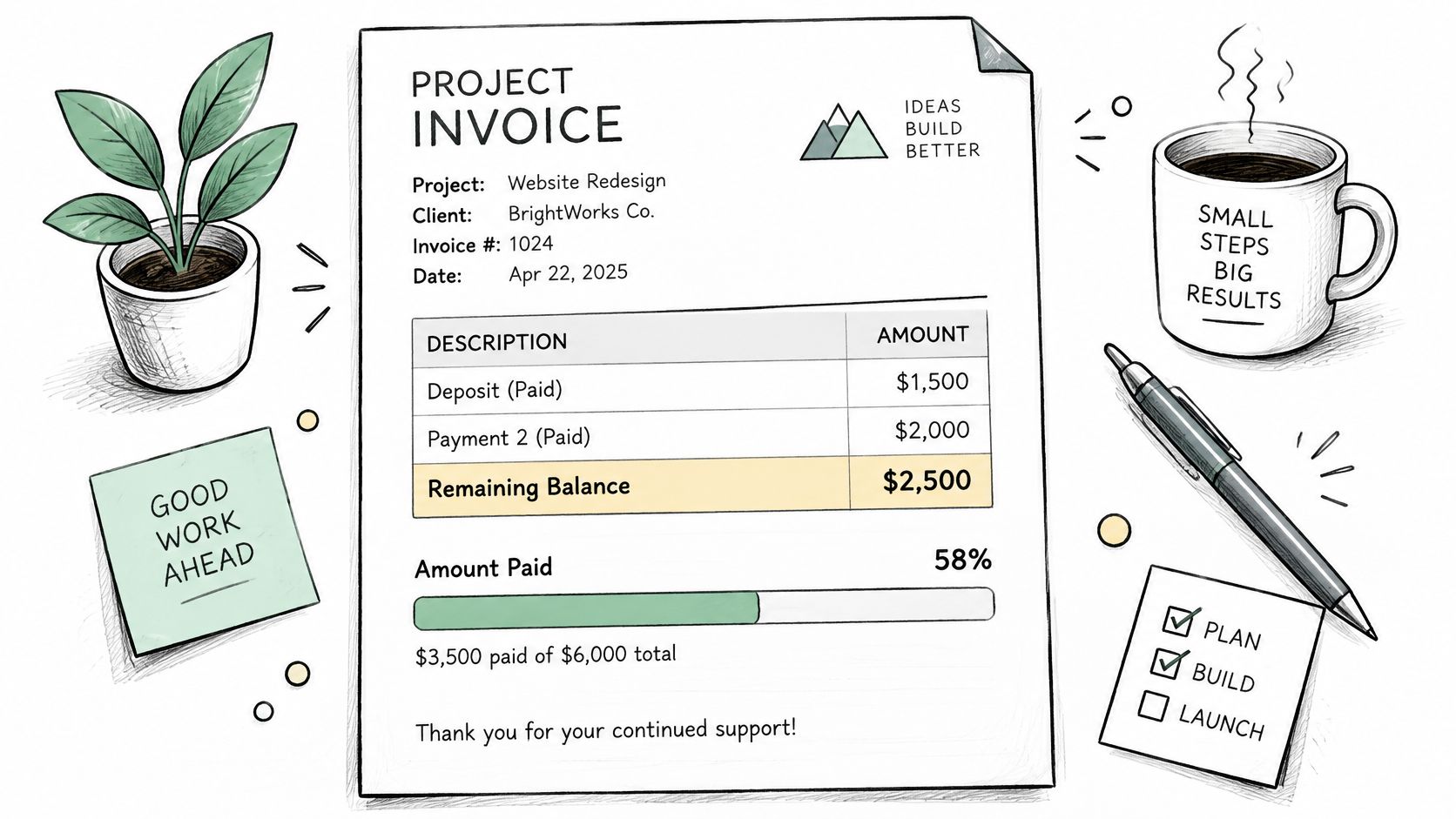
Illustrated example: a $6,000 website redesign with a $1,500 deposit and a $2,000 second payment. Total paid is $3,500, leaving $2,500 due.
Separate the Contract Value From the Current Request
In a separate hypothetical example, a $500 deposit already paid on a $1,500 project leaves $1,000 outstanding. If the deposit has only been requested, show it as due and record it as paid once you receive it.
Include these fields:
- Project total: The agreed value gives the client context for the requested payment.
- Amount requested now: Label it as a deposit or partial payment so it is not mistaken for the full project charge.
- Payments received: Record the date, amount, payment method, and reference for each payment.
- Remaining balance and due date: Show what is still owed and when it is due.
A wedding photographer might request a booking deposit, then set a due date for the remaining balance before the event. A contractor might collect a materials deposit and bill separately defined progress payments. The deposit invoice template can help organize the project total, current request, and balance in one view.
State the Deposit Conditions Before Collection
Put refund and cancellation conditions in the agreement, then reference them briefly on the invoice. The word deposit alone does not explain what happens if the client cancels, reschedules, or work has already started after materials were ordered.
State which payment methods you accept and when a payment counts as received. A pending transfer is not cleared funds, so keep it separate from payments already received. Record partial payments as they arrive and update the remaining balance, rather than changing the agreed project total.
The invoice shows the amount due and payment history. The business's accounting treatment is a separate matter, and a deposit deduction on the invoice does not determine its tax treatment.
4. Milestone-Based Project Invoice
A milestone invoice bills an agreed stage of work, not elapsed time. It fits a brand-design project, a website build, or a consulting engagement divided into defined research phases.
The milestone needs an observable completion point. Concept approval is clearer than substantial progress, provided the agreement explains what the client must approve.
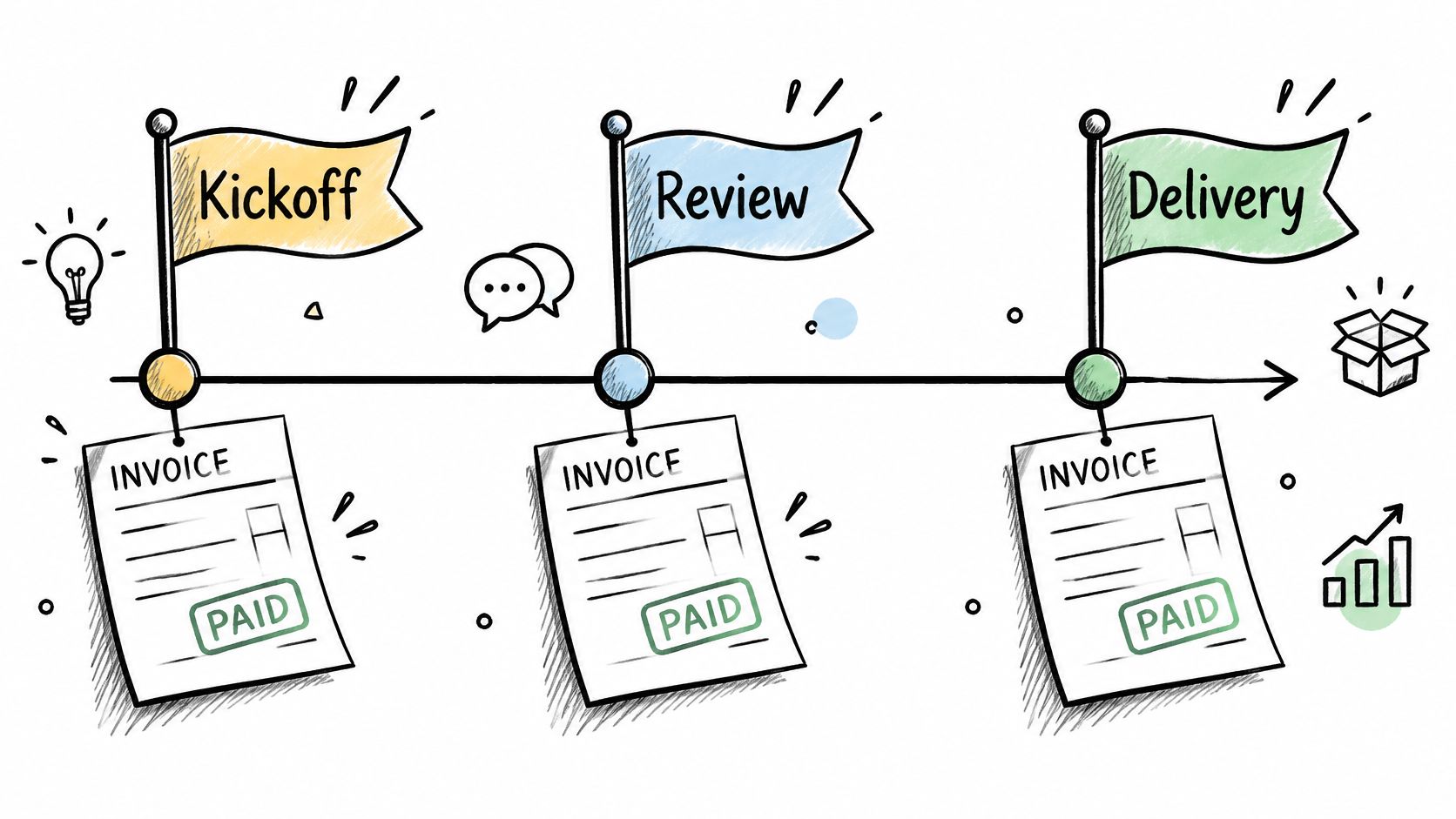
A timeline can show where each payment belongs in the project.
Identify the Deliverable That Triggers Billing
For a brand designer, the stages might be kickoff, concept approval, and final-file delivery. Each invoice should identify the stage being billed and the relevant acceptance record.
- Milestone name and reference: These distinguish the current request from earlier project invoices.
- Deliverable and acceptance criteria: These explain why the stage is ready for billing.
- Approval or completion date: This connects the invoice to the project record.
- Current charge and project summary: Separate amounts billed, payments received, and future unbilled work prevent confusion about the remaining commitment.
Unbilled work isn't an overdue balance. A running project summary should keep those categories separate, particularly when a client has paid earlier stages but still owes future contractual payments.
A milestone is useful only when both parties can tell whether it has been reached.
Agree on Review Procedures Early
The statement of work should set a review window, identify the authorized approver, and explain what happens when feedback is delayed. Any provision treating silence as acceptance needs appropriate contract review rather than being introduced on the invoice.
Compared with hourly billing, milestone billing gives the client a clearer stage price but puts more weight on accurate scope definition. An owner who underestimates revisions can't fix that problem by relabeling unfinished work as complete.
For a phased consulting engagement, the invoice should name the completed research phase and its output. A reference to the delivered report or approval email is more useful than a vague consulting services line.
5. Photography Session Invoice with Usage or Licensing Lines
A commercial client can approve the photography session and still question the image-use charge. The invoice should distinguish making the photographs from the permitted use described in the license agreement.
A portrait assignment may need session, editing, and print-upgrade lines. A commercial assignment may also need a separately described usage license.
Keep Production and Usage Charges Separate
A practical photography layout includes:
- Session fee: The assignment name, session date, and agreed coverage explain the production charge.
- Edited-image package: The image selection and editing scope distinguish included work from extra retouching.
- Usage-license reference: The media, territory, and license period identify the purchased usage without crowding the invoice.
- Travel, rush work, and upgrades: Separate approved charges prevent them from appearing as unexplained additions.
- Deposit and balance: Payment dates and the current amount due prevent the booking payment from being overlooked.
For a numerical example, Plutio's invoicing guide illustrates a portrait session of 6 hours at $150, totaling $900, plus editing of 20 images at $25, totaling $500. That structure lets the client check production and editing separately rather than receiving an unexplained package total.
Put Detailed Rights in the Agreement
The invoice should reference the license agreement by name or date. Detailed provisions about permitted use, exclusions, extensions, and delivery conditions belong in that agreement, with legal review where appropriate.
For example, a commercial photographer can identify website and paid-advertising usage as separate from the session itself. The invoice shouldn't imply unlimited use when the agreement describes a narrower license.
Delivery details also affect approval. Naming the delivery method and expected turnaround helps distinguish the photography session from the later delivery of edited files.
The trade-off is document length. A concise invoice is easier for accounts payable to process, but a short description must still point to a complete agreement. Removing licensing detail entirely isn't the same as simplifying it.
6. Trade Invoice with Labor, Materials, and Reimbursable Costs
The customer remembers the quoted job price. The contractor remembers the extra disposal run, replacement part, and equipment rental. Unless those costs were approved and recorded, the final invoice becomes the first uncomfortable conversation about them.
A trade invoice should separate labor from purchased items and approved out-of-pocket expenses. The supporting receipt explains a purchase; the agreement explains why the customer owes it.
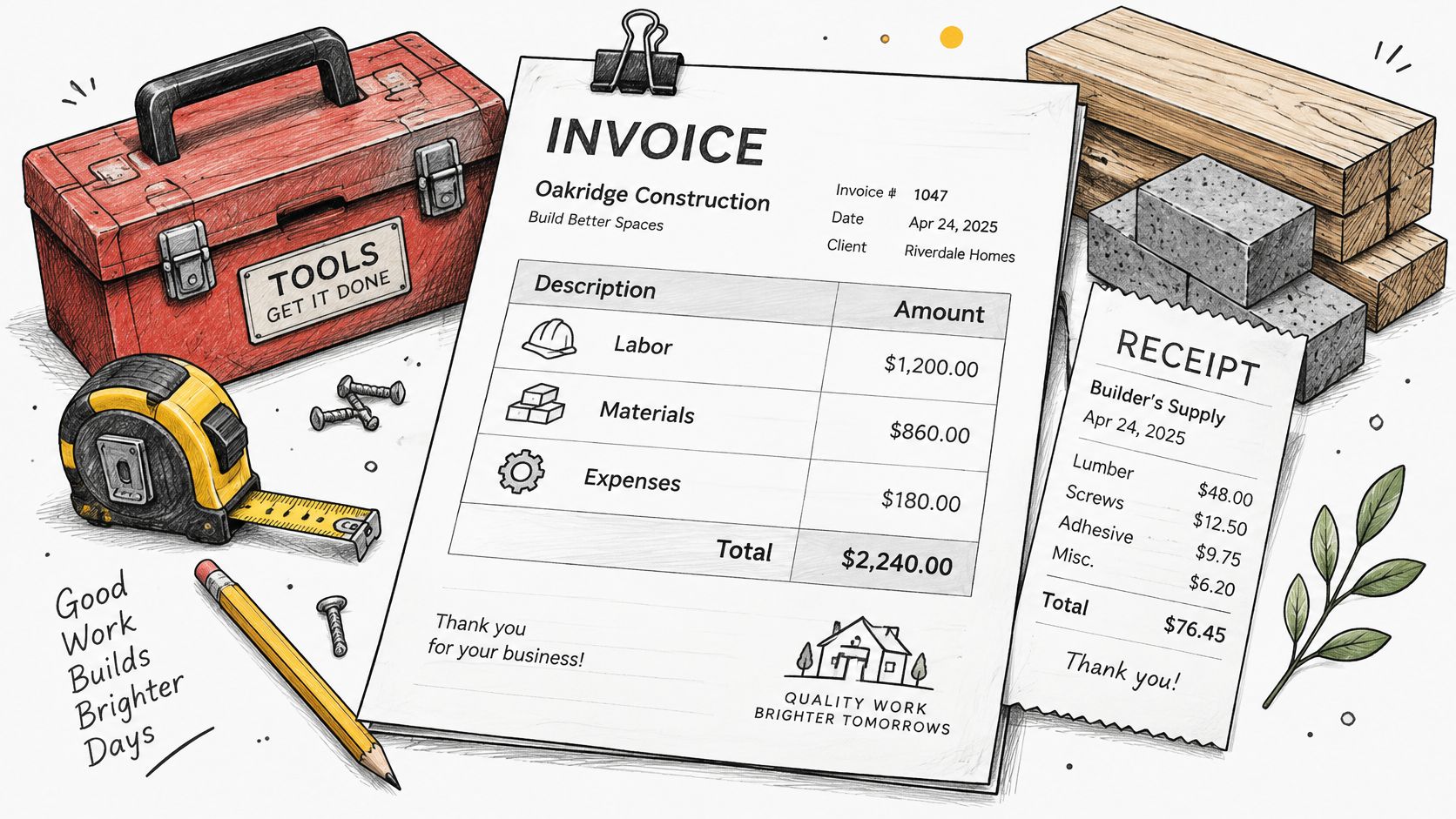
Illustrated example: the $76.45 receipt documents one purchase. Other reimbursable costs need their own supporting records.
Make Each Cost Traceable
- Job address and completion date: These identify the property and visit, especially for landlords or repeat customers.
- Labor description and quantity: These explain the work performed rather than merely listing attendance.
- Materials and equipment: Item names and quantities distinguish installed materials from rental costs.
- Disposal, permits, or subcontractor charges: Separate approved lines prevent these costs from disappearing into a miscellaneous fee.
- Reimbursement basis: The invoice should match the agreed at-cost or markup arrangement and reference supporting receipts.
A handyman's example can list faucet-replacement labor, the replacement faucet, plumber's putty, and disposal. A roofer's version can separate tear-off labor, shingles, underlayment, and dumpster rental.
Record Expenses Before Billing
Receipt photographs should be attached to the job record while the purchase is identifiable. Expenses should enter the relevant billing period rather than accumulating until neither party remembers the reason.
A consultant's airfare and hotel for an on-site workshop follow the same logic, as do an event producer's venue and equipment rentals. Prior written agreement should identify reimbursable categories and any approval requirements.
The handyman invoice format guide offers a starting layout for labor, materials, and reimbursable costs.
A spreadsheet makes calculations easier to review, while a PDF preserves the sent layout. Neither format replaces receipt storage, approval records, or a check of the applicable tax treatment.
7. Recurring Service Invoice for Retainer or Monthly Clients
For a monthly service agreement, issue a separate invoice manually for each billing period. Show the dates covered, the agreed fee, and any work outside the regular scope.
For a bookkeeper, that might mean a monthly bookkeeping line plus separately approved cleanup work. For a cleaner, it might mean a recurring service plan plus a deep-cleaning add-on.
Show What the Regular Fee Covers
The recurring template should carry these annotations:
- Billing period: The start and end dates prevent confusion about whether the fee covers past or upcoming service.
- Included scope: A concise description distinguishes the regular service from separately billable work.
- Retainer or plan fee: The amount should match the current agreement, including any approved renewal change.
- Variable charges: Additional work needs a description, billing basis, and approval reference.
- Credits and prior balances: Separate entries prevent a previous unpaid bill from being mistaken for a new service charge.
The agreement should explain cancellation notice, renewal changes, and how unused capacity or unfinished tasks are handled. Those terms shouldn't appear for the first time on a monthly bill.
Billing discipline: A repeated layout is useful. Repeating an outdated fee, old balance, or incorrect service period isn't.
Track Exceptions During the Service Period
Variable work should be recorded as it happens. Reconstructing extra requests from a crowded inbox at billing time makes omissions and disputed descriptions more likely.
Regular billing also doesn't remove the need to reconcile payments. An owner should match each received payment to the correct invoice rather than assuming a familiar amount belongs to the latest bill.
For U.S. self-employed taxpayers, the IRS Self-Employed Individuals Tax Center explains estimated-tax responsibilities and the potential underpayment penalty for insufficient required payments. A recurring client payment should therefore be reconciled with business records, not treated automatically as spendable profit.
The practical trade-off is consistency versus scope creep. A stable fee is easy to recognize, but the owner still needs a clear boundary between included service and additional work.
How the seven invoice examples differ
| Item | Best for | Billing basis | Distinctive field | Payment timing |
|---|---|---|---|---|
| Itemized Service Invoice for Hourly or Flat-Fee Work | Freelancers and service providers | Hours or fixed-price services | Itemized work, rates, and totals | Due date set by payment terms |
| Estimate Converted into Invoice | Contractors and service providers with changing project scope | Approved estimate and completed work | Invoice references the original estimate and approved changes | Invoiced once work begins or finishes |
| Deposit and Partial Payment Invoice | Providers reserving time or buying materials upfront | Project total, deposit, and partial payments | Tracks payments received and remaining balance | Deposit upfront; balance paid in stages |
| Milestone-Based Project Invoice | Fixed-scope projects with defined deliverables | Completed or accepted milestones | Milestone names and running project balance | Due at each milestone |
| Photography Session Invoice with Usage or Licensing Lines | Photographers selling sessions and image usage | Session, image package, add-ons, and licensing | Separately stated usage or licensing terms | Deposit and balance due on stated dates |
| Trade Invoice with Labor, Materials, and Reimbursable Costs | Contractors and field-service operators | Labor, materials, and approved expenses | Separate charges with receipts or receipt summaries | Due date set by invoice terms |
| Recurring Service Invoice for Retainer or Monthly Clients | Ongoing monthly service arrangements | Fixed recurring fee plus variable charges | Billing period and retainer terms | Issued on a regular schedule; due date stated |
Choose the Layout That Matches How You Get Paid
The best starting point is the billing pattern already agreed with the client. An hourly consultant needs descriptions, service dates, hours, and rates. A contractor with changing scope needs an accepted estimate and visible change approvals, while a photographer needs production and usage charges that match the license agreement.
Only add fields that answer a real payment question. Deposit balances belong on staged-payment jobs; receipt references belong beside reimbursable costs; service periods belong on recurring bills. A crowded template can be just as difficult to approve as an incomplete one.
Keep Approval, Billing, and Collection Connected
A reliable billing workflow keeps the accepted scope, issued invoice, and received payment connected without treating them as interchangeable records.
- Before work: Confirm the scope, billing basis, payment schedule, and person authorized to approve extras.
- Before sending: Check the recipient, descriptions, calculations, applicable tax treatment, payment history, and exact due date.
- After sending: Record delivery, match received funds to the invoice, and follow up on the actual outstanding balance.
An unpaid invoice shouldn't be rewritten merely because it is overdue. Follow-up should identify the original invoice, amount outstanding, due date, and any payment already received.
Late-payment terms need care. The UK Office of the Small Business Commissioner's late-payment guidance addresses the burden unpaid bills place on business owners, but a U.S. service business shouldn't assume that another jurisdiction's remedies apply to its contracts. Any late charge or collection provision needs review under the applicable agreement and law.
Choose Software Around the Document Trail
GetBill supports itemized estimates and invoices, converts an accepted estimate into an invoice with one click, and records partial payments while updating the remaining balance. Those capabilities address re-entry and balance tracking; they don't decide whether the scope, license wording, or tax treatment is correct.
Before adopting a template, the owner should have a qualified professional in the relevant state review tax, licensing, and contract wording. The finished invoice should let the client understand what was purchased, verify the amount, and pay through the agreed method without another explanatory email.
GetBill offers itemized estimates and invoices, branded PDFs, and deposit and partial-payment tracking for small service businesses. Owners can visit GetBill to build an invoice around their billing method and keep the amount requested separate from payments already received.